2021 deli
Sausage Report
2024
Seaboard Foods
2024 Processor of the Year
Cover Story: 2026 Economic Outlook Report
Strong demand and nutrition trends
bolster meat and poultry outlook
Tight beef supply opens opportunity for chicken at foodservice.
Chief Editor
By Fred Wilkinson
One enduring factor that helps buoy the economic outlook for the meat and poultry industry is that consumers really like the product, with research by Datassential suggesting most will accept no substitutes.
But the ongoing resilience of demand for meat and poultry products is running up against lower- and middle-income households pulling back on spending, as higher-income households continue to drive growth.
Christine McCracken, executive director of animal protein at Rabobank, said looking at what's been driving the strength in the market lately, it has been primarily demand driven.
"If you look at where we are on supply, we're not flooding the market with protein," McCracken said, while noting the ongoing challenge in the beef market.
"We are not even really seeing any expansion in the herd, which means it will be some time before we get relief on the supply side," she said.
“We are dealing with extremes in supply and demand that we have not seen before — at least for a very long time,” said Mike Neal, CEO and co-founder of DecisionNext.
Beef prices are at record high levels, and that consumer demand for protein is also helping the pork industry -- and until lately, chicken as well, McCracken said, adding that prices should stay strong through 2026.
“If you think about that kind of supply-demand balance, it's generally pretty well balanced.,” she said. “You're starting to see some issues on the chicken side just because they got some really strong margins and obviously responded to that increase in demand by producing a little bit more. So they are a little out of balance right now."
McCracken said as consumers look for attractively priced protein, chicken will adjust and not only will the demand side of the equation rebound but also maybe the chicken supply will be a little smaller.
Consumer purchase behavior is responding to pricing trends across the meat and poultry category.
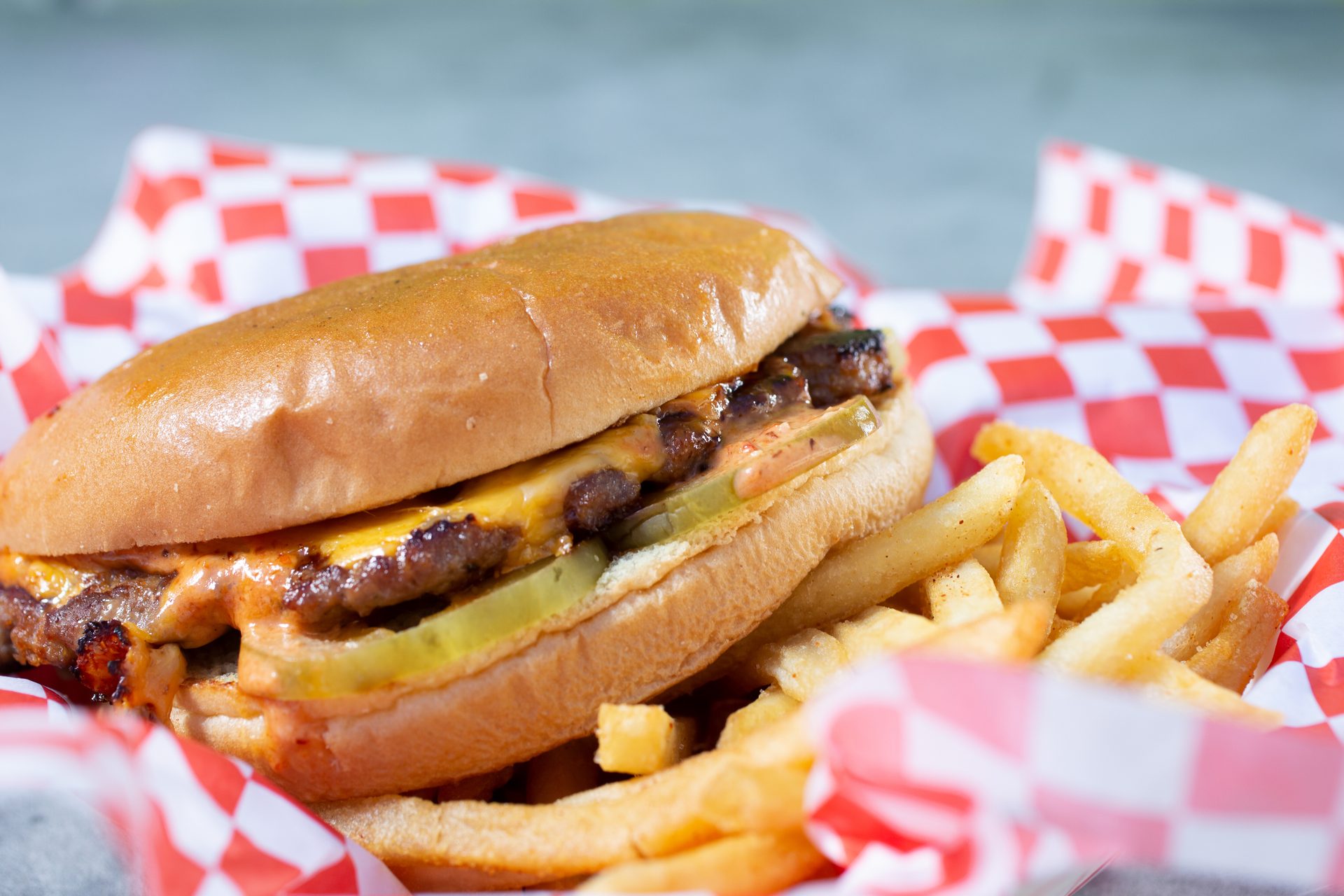
Photo credit: Getty Images / Photography By Tonelson
“We’re seeing greater variance in consumption habits, both in terms of trading down to more affordable proteins, and trading down to more affordable alternatives within a protein,” Neal said. “It seems to come down to managing to some level of consistency, both in the cost of a meal on the dinner table at home, as well as in restaurants.”
National Restaurant Association's 2026 What’s Hot Culinary Forecast reveals that patrons are embracing nostalgia, comfort and "flavor escapism" — with local sourcing and smash burgers trending.
McCracken said weakness at foodservice, which accounts for half of chicken sales, is affecting the chicken market.
“The consumer is still looking for more in-home consumption, and I think that’s where pork really wins,” she said. “Traditionally, pork hasn't done well at foodservice, so every sale that shifts to the retail channel is obviously a win for pork."
Chicken is going to continue to be a big part of both retail and foodservice channels.
“You are not going to get a big pickup in price, but at the same time that combination — that one-two punch — of retail and foodservice is likely going to be a big part of the story for chicken in 2026," McCracken said.
Current health and nutrition trends – notably the focus on protein’s importance in diets — continue to be favorable to meat and poultry sales as well.
"I think more than anything, it's an awareness of protein. Meat has been seeing a strong pull as a result,” McCracken said.
GLP-1 use continues increasing, with 23% of US households using the weight-loss medications. GLP- users will represent 35% of US food and beverage sales by 2030, according to Circana Research Reveals.
TRADE ISSUES
The unpredictable nature of the Trump Administration’s tariffs and other trade policies creates marketplace uncertainty affecting meat and poultry processors’ decision-making as they head into 2026.
“Market uncertainty caused by continually changing tariffs is a huge challenge for today's processors,” Neal said. “The phone call we're getting now more than any other is 'What happens to my business if country X gets tariff Y.' What we recommend all industry participants do is run scenarios for different tariff possibilities, so you don't get caught flat-footed.”
While recent trade deals with Southeast Asian nations are a positive development – particularly for US beef, McCracken said – they will not likely produce short-term benefits .
"It takes time to build relationships in export markets," she said.
The AI effect
AI will continue driving emerging market opportunities for meat and poultry processors, Neal said.
“The evolution of generative AI in the last three years has created some interesting opportunities in meat and poultry,” he said. “In the area of buying and selling, the power of AI can create a step change in performance around choosing the right pricing formula and the right timing for transactions. It also makes it easier to put rigorous science behind building the optimal forward-sold or forward-bought position.”
Neal added that, “These extremes test our processes. They test which benchmarks we should be using, and they test our ability to forecast. AI allows us to make forecasts in this uncharted territory and then add our assumptions to build credible scenario forecasts.”
Opening image credit: Getty Images / FXQuadro