special report
Regulatory Update
Regulatory efforts focus on fighting disease –
in people and cattle
New Dietary Guidelines for Americans play up the need for animal protein in diets, while USDA takes aim at New World Screwworm.
By Dan Emery
Under the leadership of Health and Human Services Secretary Robert F Kennedy Jr. and the Trump Administration’s Make America Healthy Again push, the meat and poultry industry has an ambassador championing the importance of animal proteins (and fats) in Americans’ diets.
In addition to receiving a new focus for animal protein’s role in federal Dietary Guidelines for Americans, the US Department of Agriculture’s moves to address the New World Screwworm threat to US cattle herds and the nation’s already tight beef supply stands as another industry-friendly regulatory development.
New World Screwworm threat
USDA says that thanks to strong surveillance and response programs, the current New World Screwworm risk to livestock, other animals, and people in the US remains low, with ongoing surveillance in animals showing no evidence of NWS in the US as of late February 2026.
The NWS animal health scare began in November 2024, when USDA received an official notice from Mexican authorities about a positive detection of New World screwworm in Mexico.

Image courtesy CDC
According to the Centers for Disease Control & Prevention, since 2023, Mexico and Central America combined have reported more than 152,000 cases of NWS in animals and more than 1,300 cases in people as of Feb. 10, 2026.
NWS is a parasitic fly that lays eggs in open wounds or other body cavities of warm-blooded animals, and the larvae feed on and burrow into flesh, CDC explains. Although primarily affecting livestock like cattle and horses, the flies can also lay eggs on people, wildlife and domestic animals and can be fatal if left untreated.
Agriculture Secretary Brooke Rollins, Texas Gov. Greg Abbott and other federal, state and local officials held a grand opening of a sterile fly dispersal facility run by APHIS at Moore Airfield Base in Edinburg, Texas, to combat NWS.
APHSI added that the sterile flies for this effort will initially be dispersed from the Tampico, Mexico, facility. USDA plans to shift the operations to the new Texas facility if the location of flies shifts or a new concentration of NWS cases is discovered in northern Mexico.
APHIS also has made up to $100 million available to support innovative projects that enhance sterile NWS fly production, strengthen preparedness and response strategies, and safeguard U.S. agriculture, animal health, and trade, the agency said.
The US Food and Drug Administration in early February 2026 issued an Emergency Use Authorization allowing for Ivermectin use to combat NWS. The agency has concluded that based on the scientific evidence available, it is reasonable to believe the drug may be effective for the prevention of infestations caused by NWS larvae in cattle when administered within 24 hours of birth, at the time of castration, or when a wound appears.

Dietary Guidelines say eat your meat
The new Dietary Guidelines for Americans introduced by the Health and Human Services Department and USDA in early January 2026 include an updated food pyramid that is favorable to the animal protein industry. The new guidelines prioritize protein consumption as part of its messaging for Americans to make nutrient-dense, minimally processed foods the focus of their diets.
In rolling out the new dietary guidelines, food policymakers noted America is facing a full-scale health emergency, with more than 70% of adults being overweight or obese, and more than half being diabetic or pre-diabetic.
The dietary guidelines emphasize simple, flexible guidance rooted largely in fresh, whole foods:
- prioritize protein at every meal
- consume full-fat dairy with no added sugars
- eat vegetables and fruits throughout the day, focusing on whole forms.
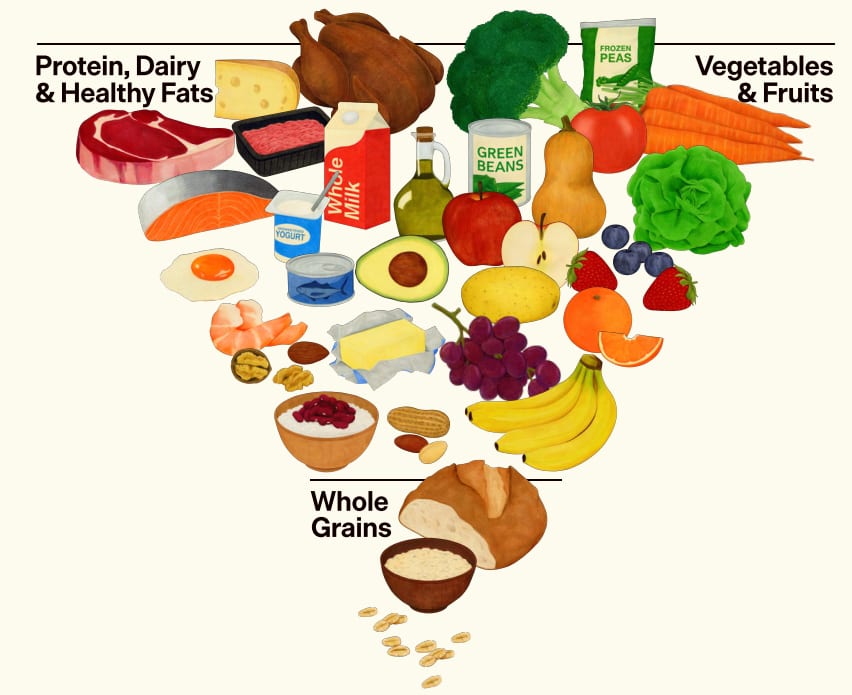
Image courtesy HHS
The dietary guidelines also provide tailored recommendations for infants and children, adolescents, pregnant and lactating women, older adults, individuals with chronic disease, and vegetarians and vegans, ensuring nutritional adequacy across every stage of life.
The new guidelines maintain longstanding recommendations on limiting sodium intake, promoting whole grains, and highlighting the importance of consuming fruits and vegetables. DGA also introduces several notable shifts in nutrition guidelines, which focus on increasing daily protein intake from nutrient-dense sources (e.g., meat, dairy, beans, nuts and soy), emphasize the benefits of dairy, and advise against "highly processed" foods. A redesigned food pyramid now places protein, dairy, and healthy fats alongside vegetables and fruits in the largest sections, with whole grains occupying a smaller portion at the base.
For the first time, DGA explicitly addresses highly processed foods. A recent CDC report, “Ultra-processed Food Consumption in Youth and Adults,” found that 55% of the US population receives more than half of their daily calories from ultra-processed foods, and the new guidance calls for avoiding highly processed packaged foods that are excessively salty or sweet. This reflects growing evidence linking high consumption of highly processed foods to increased risk of obesity, cardiovascular disease, and type 2 diabetes.
In a reverse from longstanding federal nutrition policies recommending reducing animal fats in Americans’ diets, the new dietary guidelines recommend cooking with "healthy fats" – including beef tallow., The updated guidelines maintain the recommendation to limit saturated fat to no more than 10% of daily calories.
As the foundation for all federal nutrition assistance and feeding programs including SNAP and the National School Lunch Program, the new Dietary Guidelines for Americans will trigger operational and policy shifts across programs serving millions of Americans.
SNAP will be expected to tighten eligibility for food products such as sugar-sweetened beverages, candy and energy drinks. Notably, several states have already secured USDA waivers to restrict these purchases. WIC program administrators may also be tasked with reshaping food packages, specifically regarding protein sources.
Beyond meal service, DGA increasingly emphasizes tailored nutrition for chronic conditions like diabetes and heart disease. Consequently, state and local health agencies should anticipate further integration of medical nutrition therapy into community-based disease prevention initiatives.
Dan Emery has 25 years experience in the food industry, including 15 as vice president of marketing at Pilgrim's Pride. He is directing Meaningful Solutions, a company founded to assist clients in solving problems.
Opening photo credit: tomazl / Getty Images