Sausage Report
2024
Seaboard Foods
2024 Processor of the Year
cover story: 2024 MIHOF
Alternative proteins gain
renewed interest among nutrition-conscious shoppers

ALTERNATIVE PROTEIN
Texture, taste and functionality for alternative proteins become just as important as nutrition.
By Sammy Bredar Associate Group Editor
Consumer interest in alternative proteins is booming, driven by concerns over nutrition, sustainability and animal welfare, as well as increased demand for convenience-driven foods. The health and wellness movement is specifically driving renewed interest in plant-based protein solutions.
For meat processors, ingredient suppliers and formulators, understanding these evolving trends is paramount to staying competitive in a market where texture, taste and functionality are becoming just as important as nutrition.
A 2025 report from MarketsandMarkets shows that the plant-based protein market is currently estimated at $23.8 billion, projected to reach $34.9 billion by 2030 at a compound annual growth rate of 7.9% from 2025 to 2030.
According to Technavio, North America is projected to contribute 41% to the growth of the global plant-based meat market, driven by consumer concern over health and the environment. Technavio's Plant-based Meat Market report found that the market is primarily being driven by popularity among millennials, new product launches and industry investments. Market growth is being further propelled by partnerships with vendors and fast-food chains, casual-dining spots and hotels; these operations are featuring plant-based meats on their menus, attracting new customers.
To examine shifting trends and demands in the alternative protein category, The National Provisioner sat down with Foodology by Univar Solutions, Beneo and Burcon NutraScience.
Kwee Choo Ng, product manager, rice ingredients and functional proteins, North America, at Beneo, said that the alternative protein market has shifted significantly over the last few years, originally debuting as a game-changing food innovation but unable to maintain that initial interest. “Around three years ago, demand began to plateau with fewer repeat purchases due to a variety of factors including price concerns, texture and taste,” she said. “Additionally, consumers began to pay more attention to ingredient lists and nutritional information, looking for relatable and clean ingredients.”
Faba protein is one emerging alternative protein gaining attention among consumers who are seeking a cleaner label, Ng said. “Faba beans provide a variety of benefits, being an ingredient that reads clean on a label and having several applications in products due to its solubility and emulsifying properties.”
Sarah Medina, lead research and development scientist for Burcon, noted that past iterations of alternative plant-protein sources in the industry often fell short of consumers expectations for flavor, color, texture and mouthfeel. These attributes have been a top priority for the alternative protein industry in recent years.
Taste remains a top concern for today’s consumers. “To create innovative, great-tasting products that people will love and repeatedly purchase, we need next-generation, high-performance protein ingredients that provide product developers with a blank canvas on which to develop outstanding and flavorful products,” Medina said. Burcon extracts and develops high-quality plant-proteins including canola, pea, sunflower, hemp and fava bean, all high purity with more than 90% pure protein.
For both taste and texture, consumers expect alternative proteins that provide a mouthfeel experience similar to the animal-based meat product, Ng said. This demand is contributing to more blended and hybrid products, spurring collaboration across the meat and plant-based protein industries. "Besides delivering an authentic sensory profile, the mix of animal and plant proteins also brings benefits with regards to the nutritional profile (e.g. adding fiber, reducing fat)," she said.
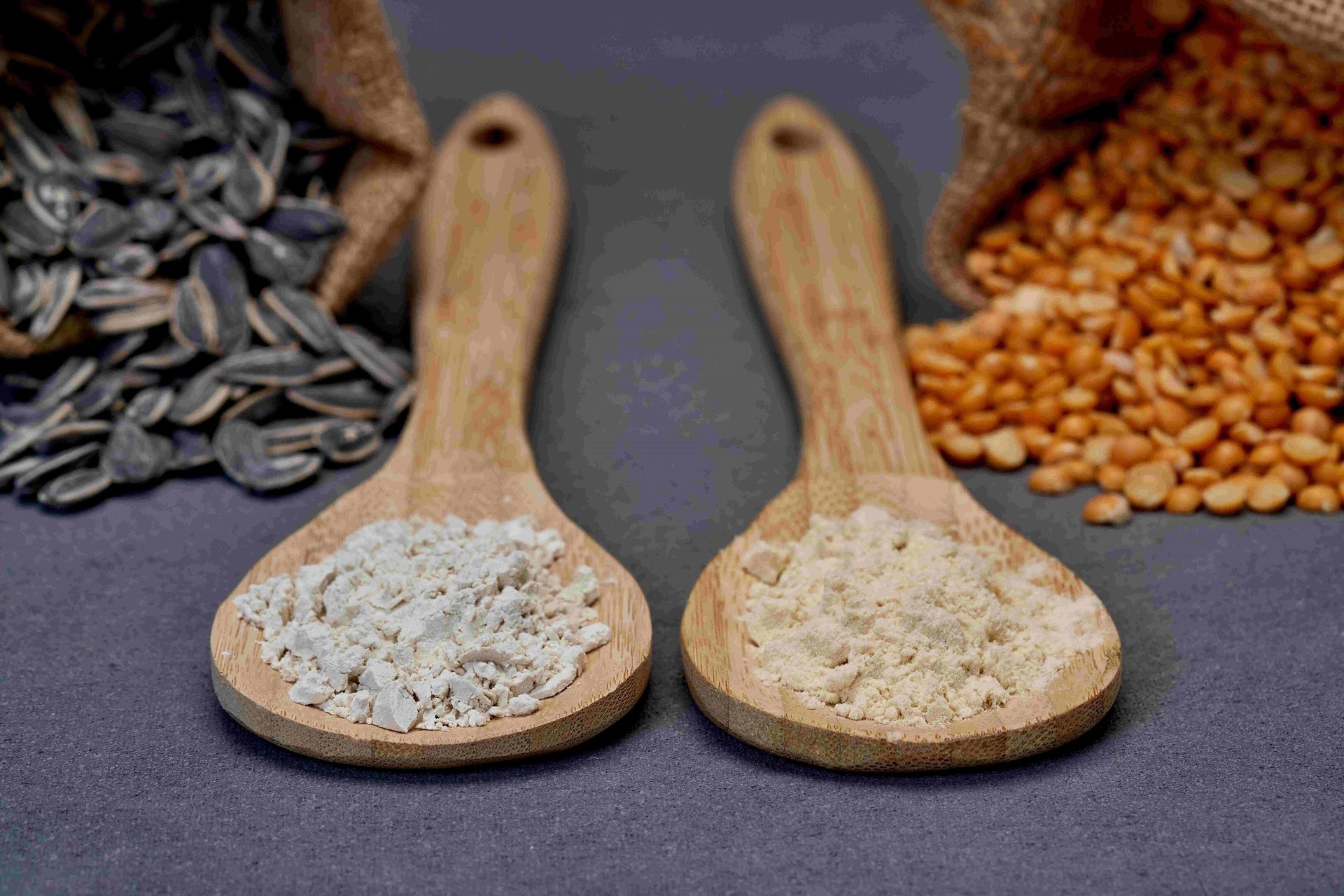
Photo courtesy of Burcon NutraScience Corp.
Additional concerns for alternative protein producers include potentially high sodium levels, added fats and sugars from processing, and incomplete plant proteins that lack amino acids, said Nadeen Myers, application development specialist for Foodology, a specialized division of Univar Solutions dedicated to the needs of the food and nutrition ingredient industries. Myers noted that these producer concerns can be addressed by utilizing alternative ingredients that provide the same functionality as those ingredients. “For example, the use of chickory fiber or inulin can function as a fat mimetic in beverages or baked goods and provide similar functionality as sugar for flavor, bulking, or browning,” Myers said. “Similarly, low sodium alternatives, such as natural sea salts, will work to provide the same efficacy as regular salt, but with reduced sodium.”
GLP-1 medications are a major driver for the alternative protein category. Myers said the GLP-1 market trend is creating opportunities for food manufacturers to meet consumer needs for reduced sugar and fat. “Additionally, there is a focus on protein quality,” she said. “While dairy currently has a protein quality advantage, the emphasis on quality and amino acid profiles is increasing across the board. This pushes alternative protein companies to innovate and improve their nutritional offerings.”
Those using GLP-1 medications have different nutrition requirements than those not using these medications. Ng said that those on a GLP-1 diet prioritize protein intake to both build and maintain muscle, supporting fat loss. “Plant proteins are now widely included in various protein-fortified foods like cereals, dairy products, ready meals, baked goods, and nutritional powders.”
Ng noted that top nutrition concerns currently driving interest in alternative proteins include goals like weight loss, heart health and increased protein intake. “Many consumers are motivated by the health advantages these ingredients bring such as lower cholesterol, reduced saturated fat, and higher fiber content.”
Medina emphasized that plant-based proteins can help meet growing demand for protein, particularly as the global population continues to grow to reach up to 10 billion by 2050. "While alternative proteins—such as plant-based and cultivated meats—are expected to grow significantly as part of a shift toward more sustainable eating habits, animal protein will continue to play a major role in meeting global protein needs."
Collaboration and ingredient exploration are likely to define the next wave of innovation in the alternative protein category. By exploring unique ingredient solutions, manufacturers can meet evolving consumer expectations for taste, sustainability and functionality.
Opening photo credit: Foodology by Univar Solutions